Thursday, March 30, 2006
There's no place like home
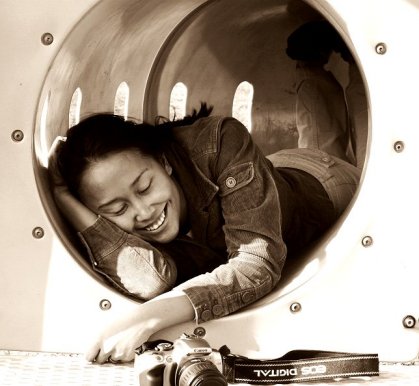
I had a great time with my family in California, but I really appreciate being home; at the very least, I appreciate familiarity.

Friday, March 17, 2006
Happy St. Patrick's Day!
I admit that I don't really know the true story of St. Patrick. I only know that he returned to Ireland, where he once lived as a slave, eventually driving away the old religion (the "snakes" that everyone refers to) to establish Christianity. The interesting thing is that God placed him in the circumstance that he needed to be in to learn about Druidic traditions (his slavemaster was a Druid priest (?)) and know the language perfectly. Patrick needed to be in that place of misery to better learn and communicate to a people who needed to know God.
I recently read another Dean Koontz book where it describes the interconnectedness of everyone on this planet, and the influences someone can effect without ever knowing it. In the book, whenever someone made a less worthy choice in life, that choice spawned another universe-that-could-have-been-and-at-the-same-time-does-exist, causing a multiplicity of universes. To sum up that epic of a book would be insufficient in a few fleeting sentences, but I say all that because I have been encountering a theme recently where I've been made to realize that every choice I make needs to be the best choice made within the center of God's will. I am living within a minute instance within the span of my life and of God's whole creation, and even though I don't know that end result right now, and may never know this side of heaven, I know that God is working all things for good. I just need to remember that investing in people/relationships is to show the true religion of service that God intended for me to accomplish; to live as a little Christ in this the best of all possible worlds.
"Pure religion and undefiled before God and the Father is this, To visit the fatherless and widows in their affliction, and to keep himself unspotted from the world." James 1:27
I recently read another Dean Koontz book where it describes the interconnectedness of everyone on this planet, and the influences someone can effect without ever knowing it. In the book, whenever someone made a less worthy choice in life, that choice spawned another universe-that-could-have-been-and-at-the-same-time-does-exist, causing a multiplicity of universes. To sum up that epic of a book would be insufficient in a few fleeting sentences, but I say all that because I have been encountering a theme recently where I've been made to realize that every choice I make needs to be the best choice made within the center of God's will. I am living within a minute instance within the span of my life and of God's whole creation, and even though I don't know that end result right now, and may never know this side of heaven, I know that God is working all things for good. I just need to remember that investing in people/relationships is to show the true religion of service that God intended for me to accomplish; to live as a little Christ in this the best of all possible worlds.
"Pure religion and undefiled before God and the Father is this, To visit the fatherless and widows in their affliction, and to keep himself unspotted from the world." James 1:27
Thursday, March 2, 2006
Thought and Intent
I read an article this morning which, though thought-provoking, seemed a bit "out there" for me to completely embrace. This article talks about being able to predict one's future because of thought or intent; it focused on changing defeatist thought patterns into positive ones. So far so good. Not much different from any other contemporary philisophy. However, the aspect of someone having thoughts (positive or negative) going out to the Universe (yes, capital "U") as energy waves, which become multiplied, and rebound back to that person, seems far-fetched. I can almost see a caricature of Negativity, as an unrelenting tsunami wave crashing into an unnamed shore and knocking over a random beachcomber, who somersaulting in the tumult, claws at the sand frantically, while unceasing "energy waves" pummel into him, wiping his face into the sand. I haven't read enough on this subject to have a true opinion, or judge its biblical-ness. I just have my good old-fashioned cynicism.
At any rate, Carol Tuttle, who dubs herself a Master Energy Therapist, says that when clients of hers dwell on negative thoughts, they are actually setting themselves up for failure. Instead of dwelling on negative thoughts, (a defense mechanism for expecting the worst or planning for the worst or not feeling so let down/crushed when the worst happens), one should ask oneself: "Why do I think that of myself? Why am I creating that for myself?" And then, follow with: "What do I have to learn from it? If the ideal thing happened in this situation, what would it look like?" I like how these questions are very practical, and do tend to focus a person toward a positive outcome. So, instead of planning for the worst, which is not such a practical foresight as it seems, one should look for the ideal in a situation, and work toward that end. That process is not unlike modeling the behaviors of successful people to become successful. In this way, she posits that a person can actually predict his or her own future.
Tuttle states in the article that I can be a predictor of my own future because I intend my future to happen. She claims that, "The greatest power we have in avoiding the worst is to intend for the best to happen." In the basic reading of that premise, I agree with it because I understand that my actions dictate where I'm going, what I'm doing, and my actions are controlled by thoughts. So, what I think, and intend, I would most likely follow through. For example, on a daily basis I have a checklist of things to do, and I purpose for myself to always do those things. But, in my mind I can envision them as finished tasks, because I have done those tasks before and am confident in being able to finish them, and also because that is what my job requires of me. In the same way, I need to extrapolate that into my life goals: have a checklist of things to do that are seemingly surmountable because of a true evaluation of my capabilities, and accomplishing those tasks as if they were required of me.
So, for the most part, the practicality of just replacing negative thoughts to positive ones are very valid, and at the very least, has allowed me to evaluate my traits, goals, etc, and realize that the goals I currently have are definitely achievable and I shouldn't feel arrogant or boastful to claim that. All the extras about energy waves, and the capital "U" Universe, seems silly and works only to detract from the otherwise practical process.
"If your will is aligned with God's will, and you really believe, and believe it can happen, it will."
P.S.
I thought this reading was serendipitous in my life right now, but I can't outline what my ideal situation is on this format, though I have written it out fully in my journal, which is why I invest in them :) I can secret away future plans that may rock the boat, but have made peace with already.
At any rate, Carol Tuttle, who dubs herself a Master Energy Therapist, says that when clients of hers dwell on negative thoughts, they are actually setting themselves up for failure. Instead of dwelling on negative thoughts, (a defense mechanism for expecting the worst or planning for the worst or not feeling so let down/crushed when the worst happens), one should ask oneself: "Why do I think that of myself? Why am I creating that for myself?" And then, follow with: "What do I have to learn from it? If the ideal thing happened in this situation, what would it look like?" I like how these questions are very practical, and do tend to focus a person toward a positive outcome. So, instead of planning for the worst, which is not such a practical foresight as it seems, one should look for the ideal in a situation, and work toward that end. That process is not unlike modeling the behaviors of successful people to become successful. In this way, she posits that a person can actually predict his or her own future.
Tuttle states in the article that I can be a predictor of my own future because I intend my future to happen. She claims that, "The greatest power we have in avoiding the worst is to intend for the best to happen." In the basic reading of that premise, I agree with it because I understand that my actions dictate where I'm going, what I'm doing, and my actions are controlled by thoughts. So, what I think, and intend, I would most likely follow through. For example, on a daily basis I have a checklist of things to do, and I purpose for myself to always do those things. But, in my mind I can envision them as finished tasks, because I have done those tasks before and am confident in being able to finish them, and also because that is what my job requires of me. In the same way, I need to extrapolate that into my life goals: have a checklist of things to do that are seemingly surmountable because of a true evaluation of my capabilities, and accomplishing those tasks as if they were required of me.
So, for the most part, the practicality of just replacing negative thoughts to positive ones are very valid, and at the very least, has allowed me to evaluate my traits, goals, etc, and realize that the goals I currently have are definitely achievable and I shouldn't feel arrogant or boastful to claim that. All the extras about energy waves, and the capital "U" Universe, seems silly and works only to detract from the otherwise practical process.
"If your will is aligned with God's will, and you really believe, and believe it can happen, it will."
P.S.
I thought this reading was serendipitous in my life right now, but I can't outline what my ideal situation is on this format, though I have written it out fully in my journal, which is why I invest in them :) I can secret away future plans that may rock the boat, but have made peace with already.
Subscribe to:
Comments (Atom)